
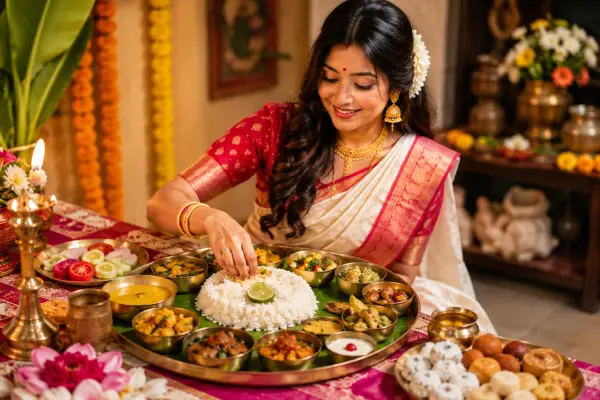
Aiburobhat is the final meal a Bengali bride or groom eats as an unmarried person. It is held a day or two before the wedding, hosted by the family, and it is one of the few pre-wedding rituals that is genuinely quiet — close family only, no stage, no crowd.
The name breaks down simply: aiburo means unmarried, bhat means rice. The last rice of single life.
Who hosts it and when
Both sides hold their own. The bride has hers at her family home, the groom at his, usually on the same day or across the two days before the wedding. Some families hold several across the week, with different relatives hosting in turn — an aunt one day, a grandmother the next.
It is a lunch, almost always. The person being feted sits on the floor on a decorated aason, and the family serves them.
What is served
The spread is the point. A full Bengali thali, laid out generously and photographed before anyone touches it:
- Rice, ghee, and shukto — the slightly bitter mixed vegetable dish that opens a Bengali meal
- Dal, fried vegetables, and several preparations of fish
- A whole fish head in mudi ghonto, or a large piece of rui or katla, considered auspicious
- Chutney, papad, mishti doi and sweets to close
The fish matters. A whole fish, often decorated, is a fixture of the aiburobhat table and is frequently the most photographed thing on it.
How it is decorated — and one thing people get wrong
Because the meal is eaten sitting on the floor, the decoration has to be built low. The single most common mistake is treating aiburobhat like a wedding function and building a raised stage: it puts the person above the food, breaks the ritual, and ruins the photographs, which are all taken looking down at the thali.
What works is a low wide floral backdrop framing someone seated, decoration around the thali itself, alpana-style petal work on the floor, and doorway torans. That is what our aiburobhat decoration in Kolkata setups are built around.
Where it sits in the wedding
Aiburobhat comes after the engagement and before gaye holud and the wedding day itself. It is the last calm moment before the week accelerates, which is part of why families are fond of it.
The Wikipedia article on the Bengali Hindu wedding lists aiburobhaat alongside the full ritual sequence if you want to see where each piece falls.
Aiburobhat and gaye holud are not the same thing
Both fall in the days before the wedding and both happen at home, so they get confused constantly — including by vendors.
Aiburobhat is a meal. The person sits and is fed, the family serves, and the decoration frames a seated figure and a thali. It is quiet and mostly close relatives.
Gaye holud is the turmeric ceremony. People stand, crowd around, and turmeric paste goes everywhere. The decoration has to survive being touched, and nothing light-coloured lasts. That is a completely different build — see haldi decoration in Kolkata.
If you are booking both, say both. Families regularly ask for “the pre-wedding one” and get the wrong setup.
Regional and family variations
Not every Bengali family does aiburobhat the same way, and some skip it. Common variations we see in Kolkata:
- Multiple sittings. Several relatives host one each across the week, so the bride eats five or six aiburobhats.
- Vegetarian spreads. Some families keep the meal entirely vegetarian, in which case the ritual fish is replaced with a decorated centrepiece dish.
- Table instead of floor. In smaller flats, or where an elderly person is being feted, the meal moves to a table. The decoration then goes taller, because the seated eye-line rises.
- Combined with mehendi. Younger families sometimes run the aiburobhat lunch into a mehendi afternoon, which is one visit and two setups.
If you are hosting one
Space is rarely the problem — an eight-by-eight foot area is enough, and low ceilings do not matter the way they do for a wedding stage. What is worth deciding early is whether you want the thali area decorated, because that is the part families most often skip and most often regret when the photographs come back.
Booking it alongside the wedding decoration usually costs less than arranging it separately, and the colours carry through both.
